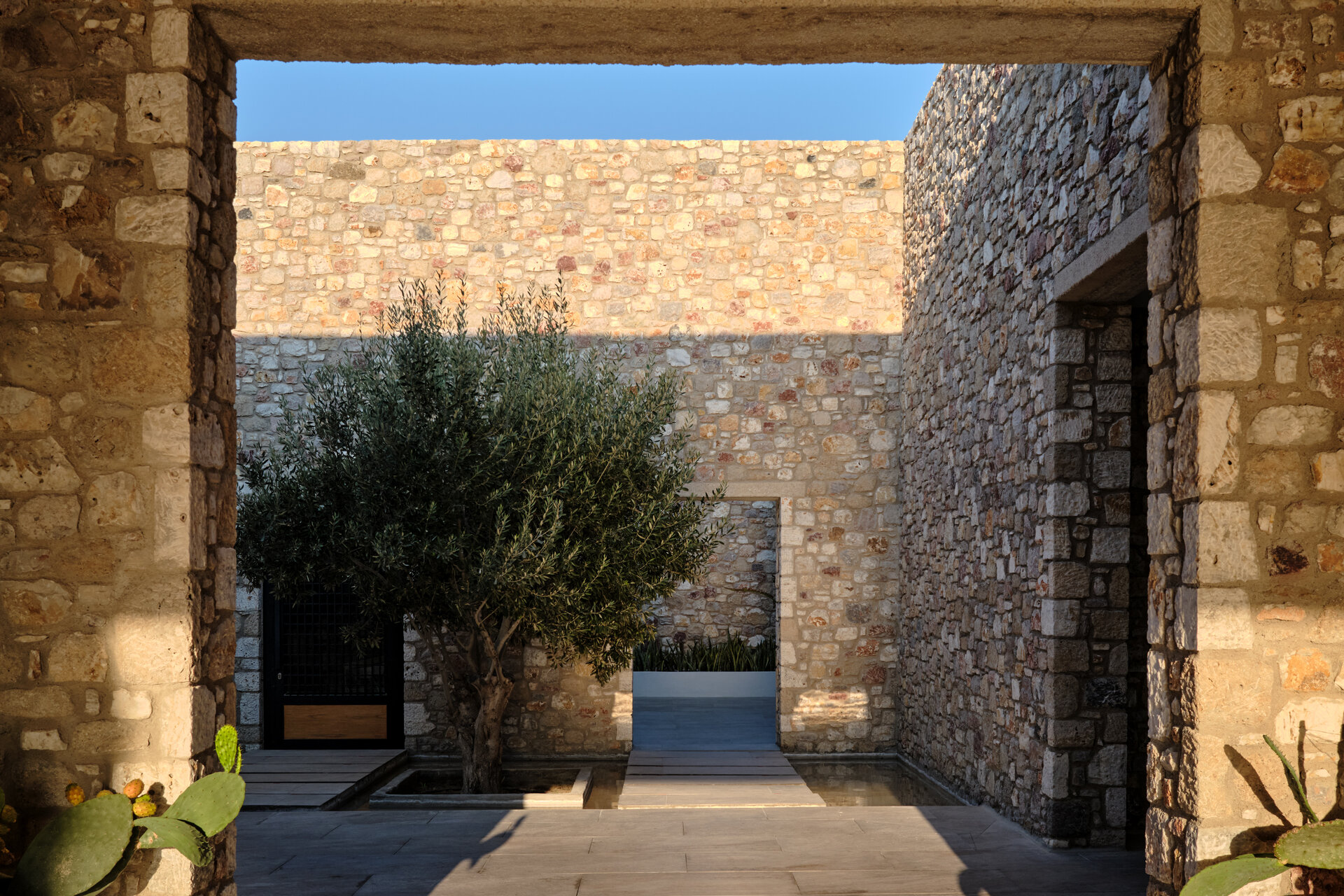
When travellers search for hidden gems in Kos, they often expect secluded beaches or quiet villages. Yet beyond the obvious beauty lies something deeper. Kos carries a restorative energy shaped by ancient medicine, volcanic landscapes, sacred ruins, and mountain stillness.
For those willing to look beyond the guidebooks, these lesser explored corners reveal the island’s spiritual dimension, a side of Kos felt more than photographed.
Asklepion – Beyond the Monument
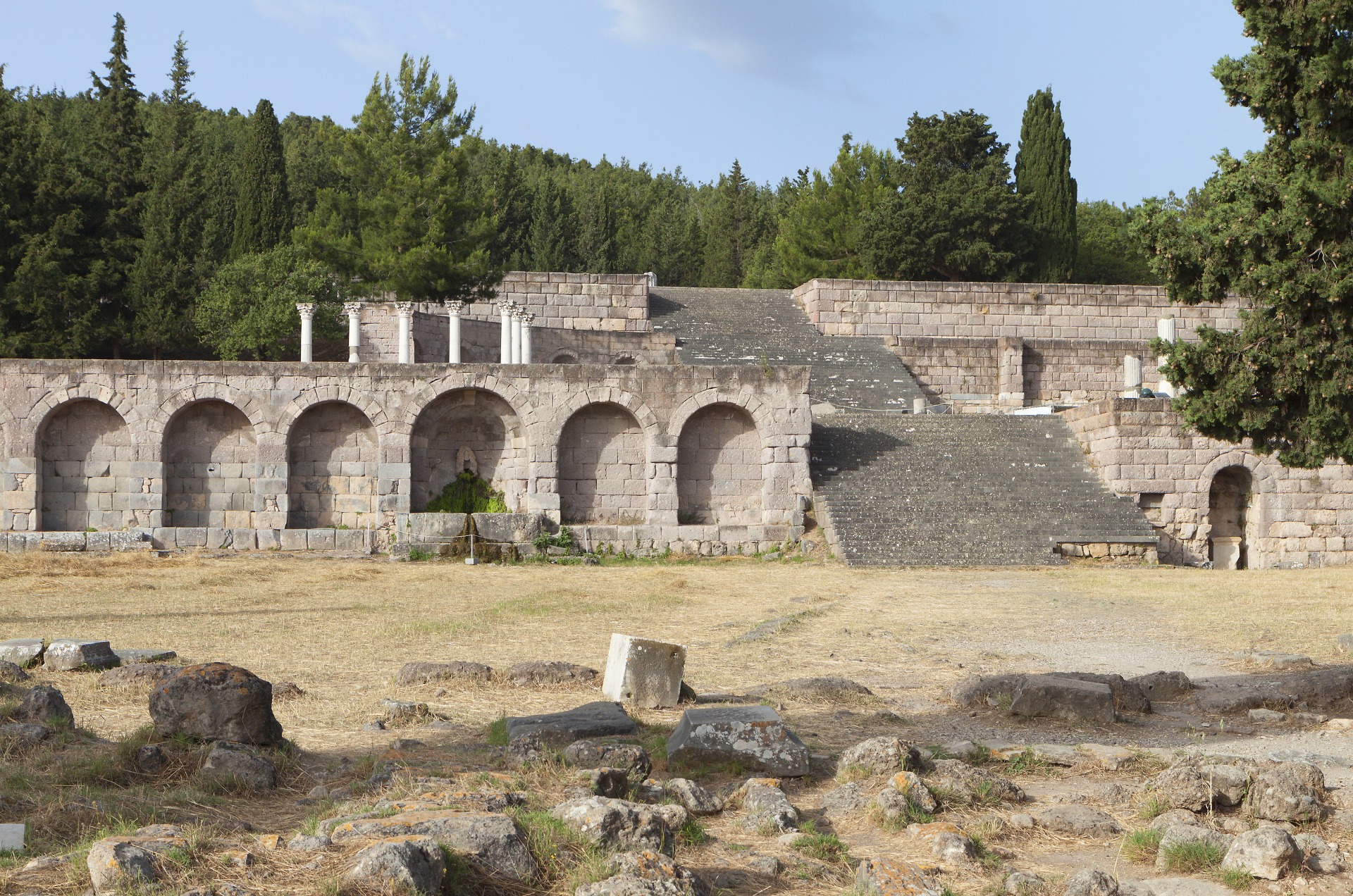
While the Asklepion is not a hidden gem in Kos in the literal sense, few experience it beyond its historical surface. Most visit it as a classical ruin. Far fewer recognise the philosophy embedded in its design.
Built in the 4th century BC and dedicated to Asclepius, the god of medicine, the sanctuary functioned as one of the most important holistic healing centres of the ancient world. Its three ascending terraces reflected stages of treatment. Patients began with physical therapies and purification rituals, progressed through medical consultation and herbal remedies, and ascended to the upper sanctuary for spiritual reflection and prayer. Healing here was layered and integrated: body, mind, and spirit.
Its orientation was equally deliberate. Overlooking the Aegean toward Asia Minor, sea air, sunlight, and elevation were believed to support clarity and recovery. Visitors practised incubation, sleeping within the sanctuary in hopes of receiving insight through dreams.
Viewed through this lens, the Asklepion stands among the most profound spiritual places in Kos, not because it is hidden, but because its depth is often overlooked. For travellers drawn to energy healing Kos has embodied for centuries, this ancient sanctuary offers a powerful historical foundation.
Mount Dikaios – The Island’s Overlooked Sacred Height
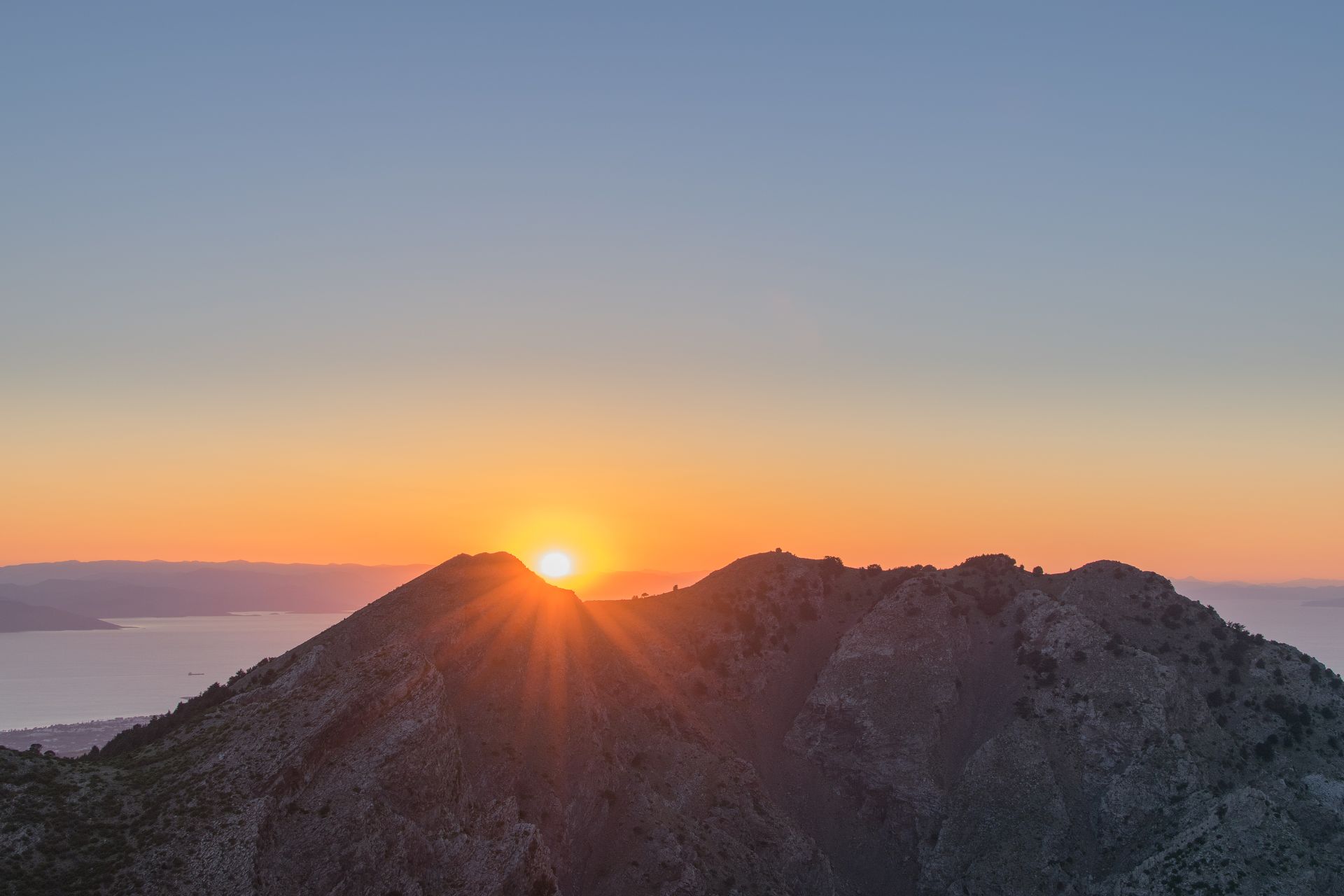
Rising to 846 metres, Mount Dikaios is the highest point on Kos, yet surprisingly under explored. In antiquity, the mountain carried spiritual meaning. It was associated with Zeus, and traces of early sanctuaries and Byzantine chapels remain along its slopes, subtle reminders that elevation was once linked to reverence.
The hike reveals more than views. Vegetation shifts from olive groves to wild herbs and pine forest. Native thyme and sage, long valued in traditional remedies, grow freely here, connecting landscape to ancient therapeutic knowledge.
At sunrise, the summit feels transformative. Light spreads slowly across valleys and coastline, creating perspective rather than spectacle. Among the hidden gems in Kos, Mount Dikaios stands apart not because it is secret, but because its contemplative dimension is often missed.
To arrive before the day begins is to experience the mountain as it once was intended: a place of clarity above distraction.
Therma – Where Fire Meets the Sea
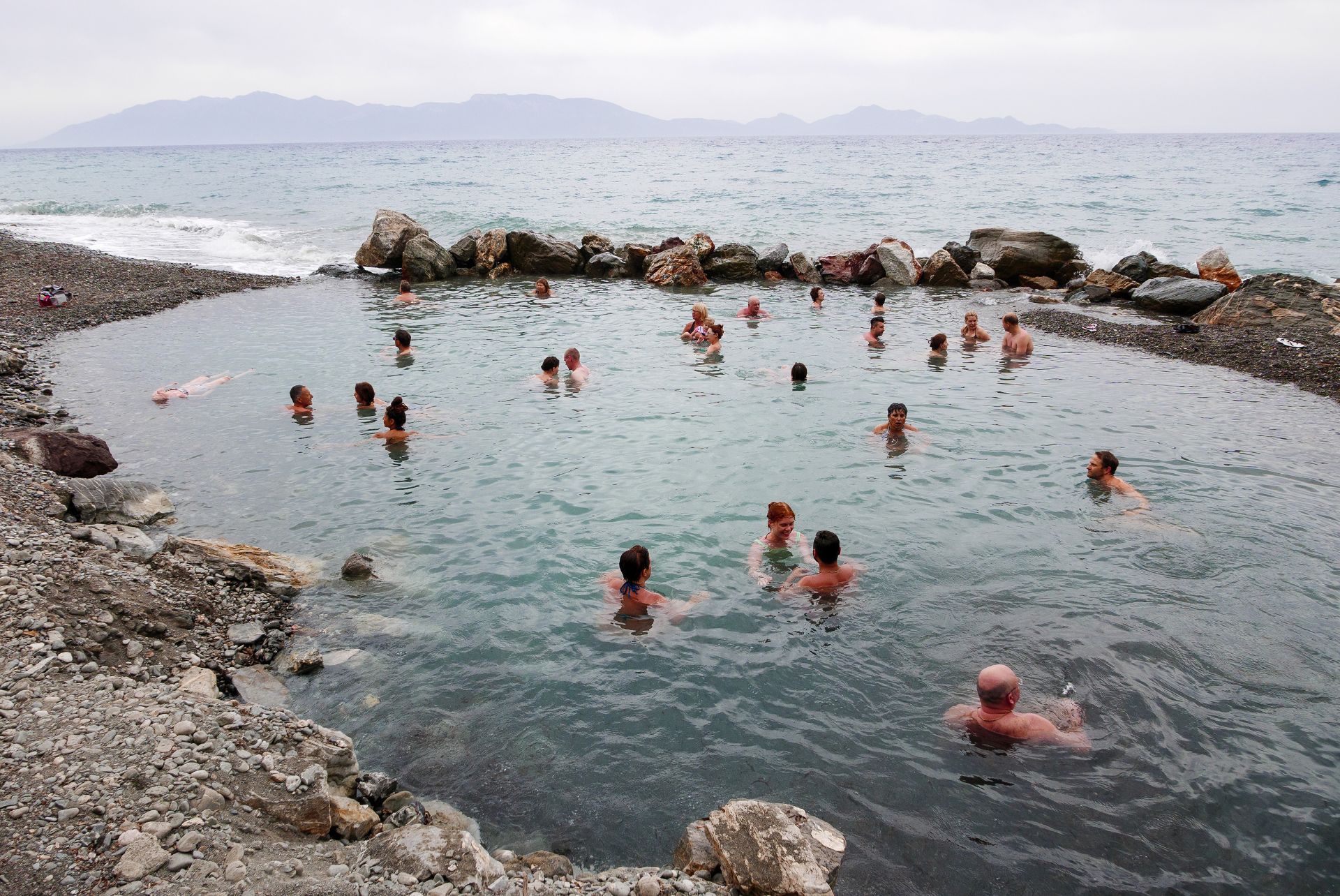
On the island’s eastern edge lies Therma, where sulphur rich waters rise through volcanic rock before merging with the Aegean. Heated by underground tectonic activity, the springs reflect the geological forces that shaped Kos itself.
Bathing conditions vary, yet the setting is compelling: dark stone formations, mineral traces, and warm currents meeting cool sea. The contrast is elemental.
Long before modern spa culture, geothermal sites were recognised for restorative qualities. Therma remains one of those hidden gems in Kos where the island’s raw energy is tangible, a meeting point of fire, water, and time.
Guests of KOIA Resort can reach this place within a 10 minute drive from our location in Kos, Agios Fokas.
Agios Stefanos & Ruins by the Sea
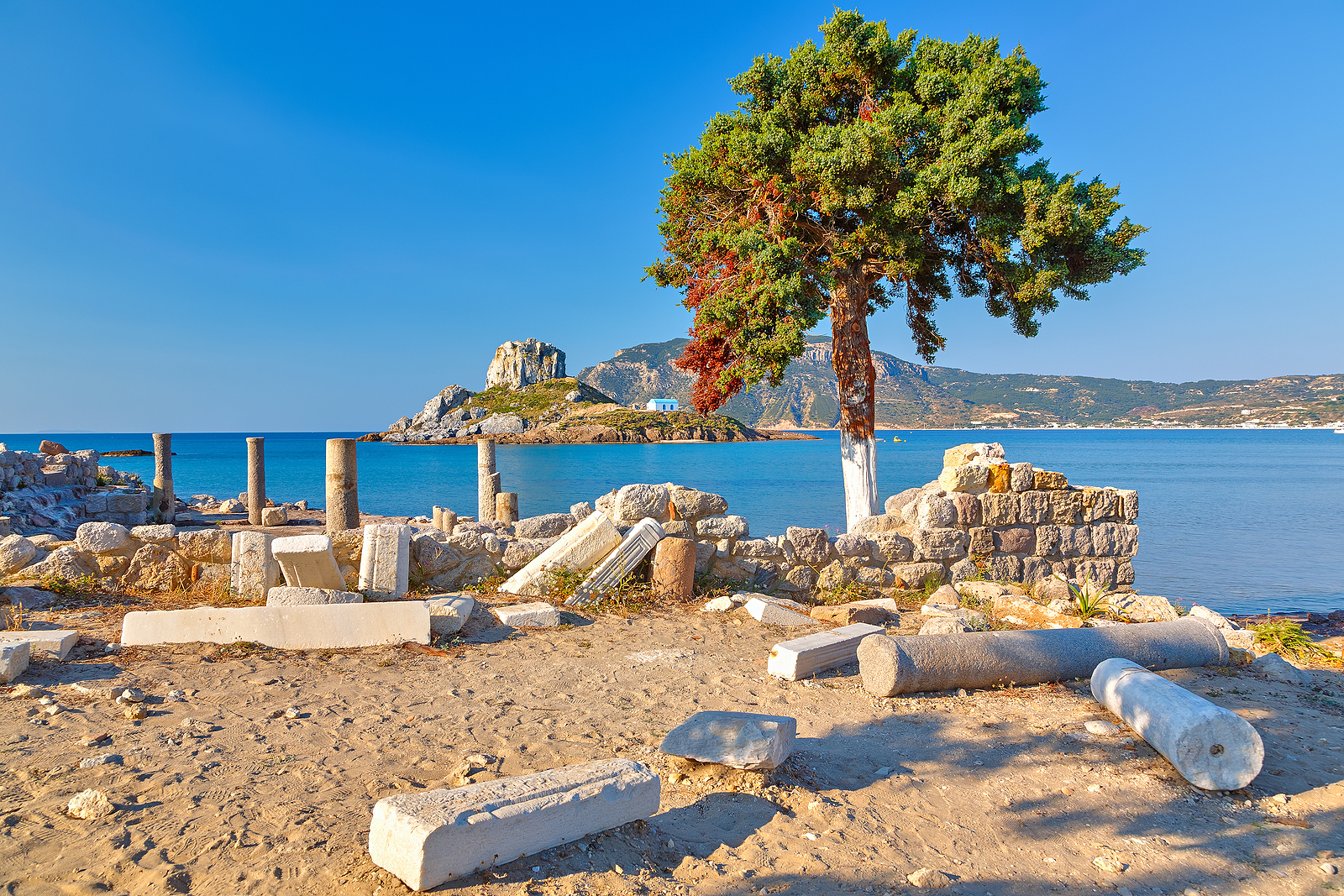
Near Kefalos, the early Christian basilica of Agios Stefanos rests quietly along the shoreline, its foundations dating back to the 5th century AD. Fragments of intricate mosaic floors and marble columns still trace the outline of what was once a significant religious site.
Opposite, the small islet of Kastri, crowned by a tiny chapel, adds depth to the view, creating a layered coastal panorama that feels suspended between eras.
Arrive early or late in the day, and the atmosphere shifts. With fewer visitors, the site regains its contemplative character. It is not hidden in location, but in tempo; a place where history is best experienced slowly.
The Plane Tree of Hippocrates & Zia at Dusk
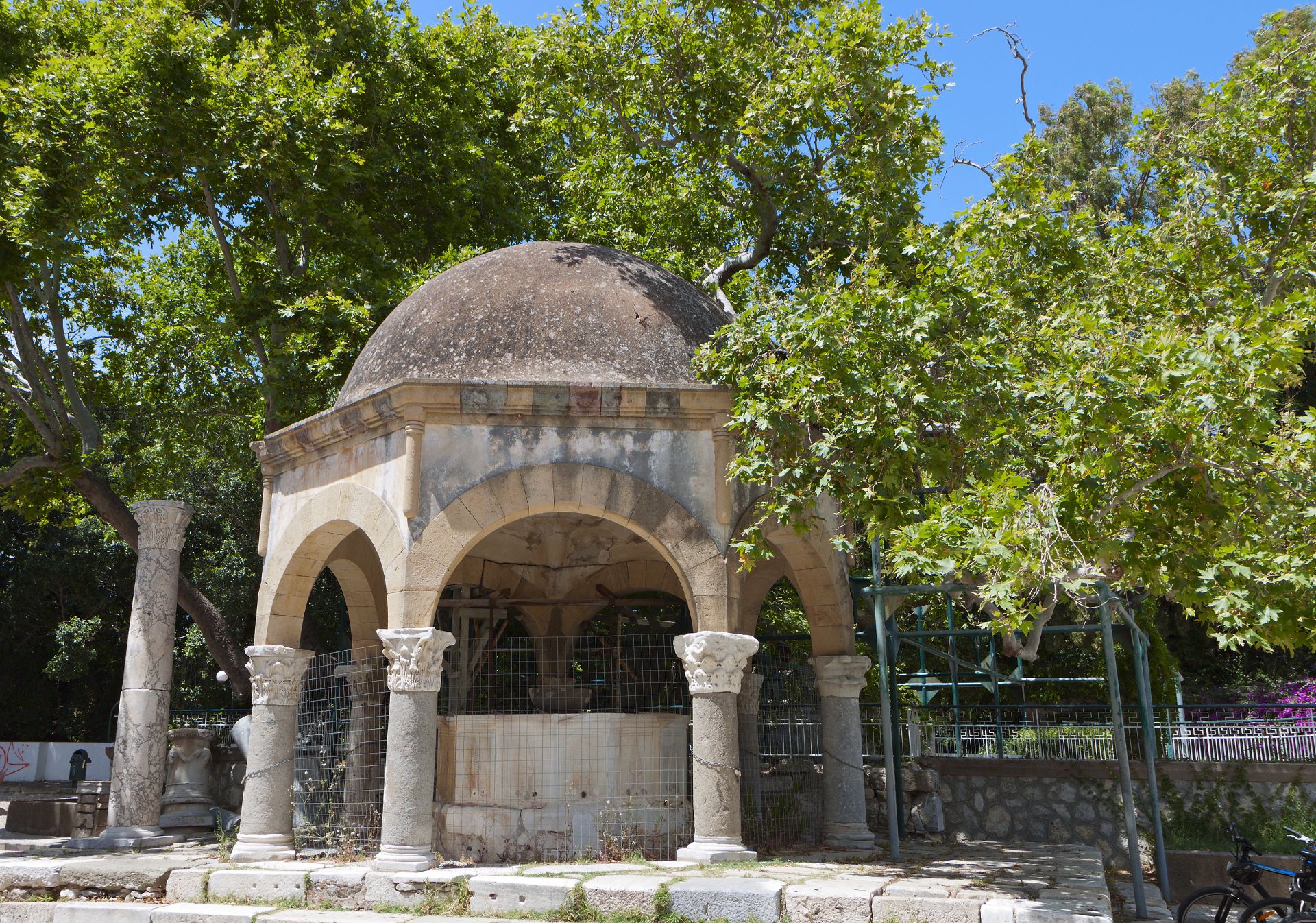
In Kos Town, the Plane Tree of Hippocrates marks the location traditionally associated with the teachings of the father of medicine. Though not the original tree, it remains a powerful symbol of the island’s intellectual legacy.
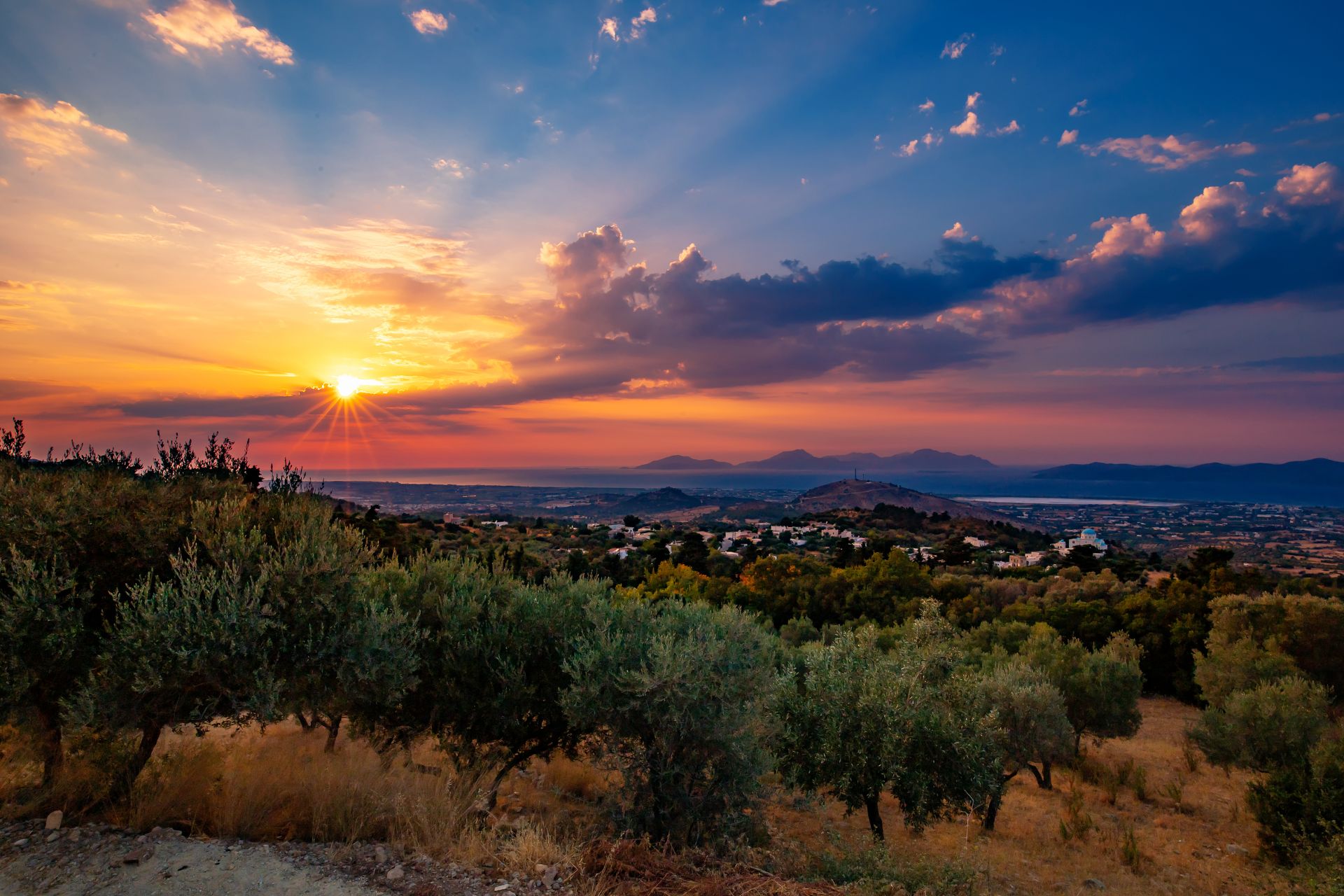
Inland, the village of Zia offers a different energy. Elevated on the slopes of Mount Dikaios, it is known for expansive sunset views. Yet beyond the popular outlook points, quieter alleys and shaded courtyards reveal a slower pace.
The shift from coastal brightness to mountain calm creates a subtle emotional transition, one that makes these landscapes part of the more reflective hidden gems in Kos visitors gradually discover.
Experiencing the Spiritual Side of Kos
Exploring the hidden gems in Kos becomes more meaningful when your stay reflects the same philosophy. Choosing accommodation aligned with the island’s Hippocratic heritage allows the journey to continue beyond daily excursions.
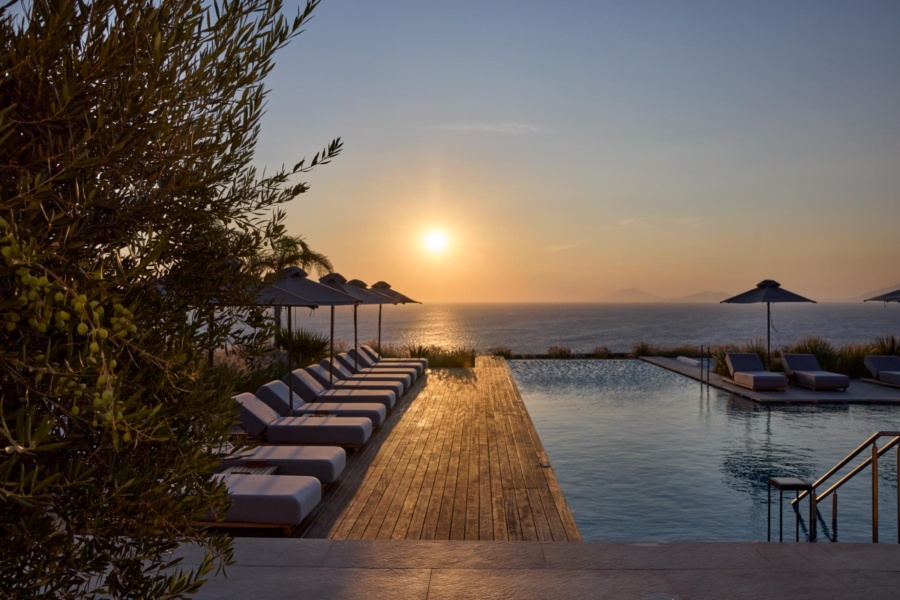
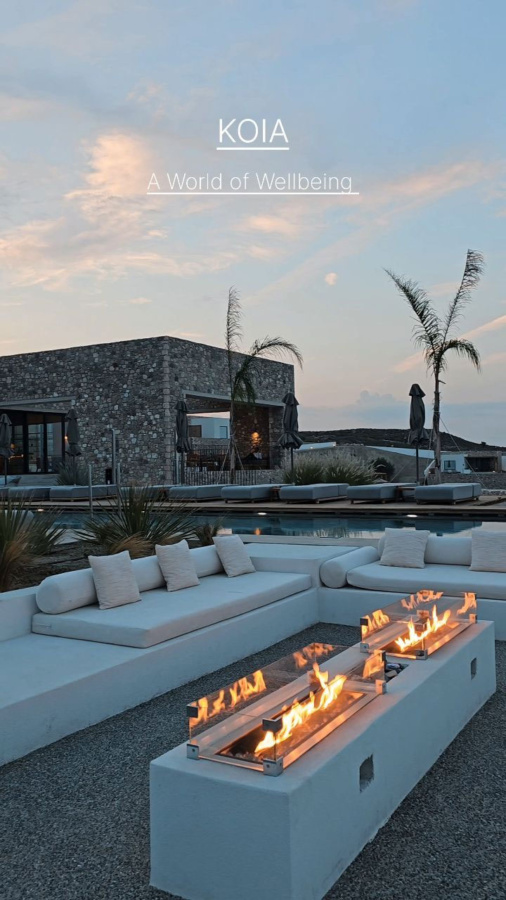
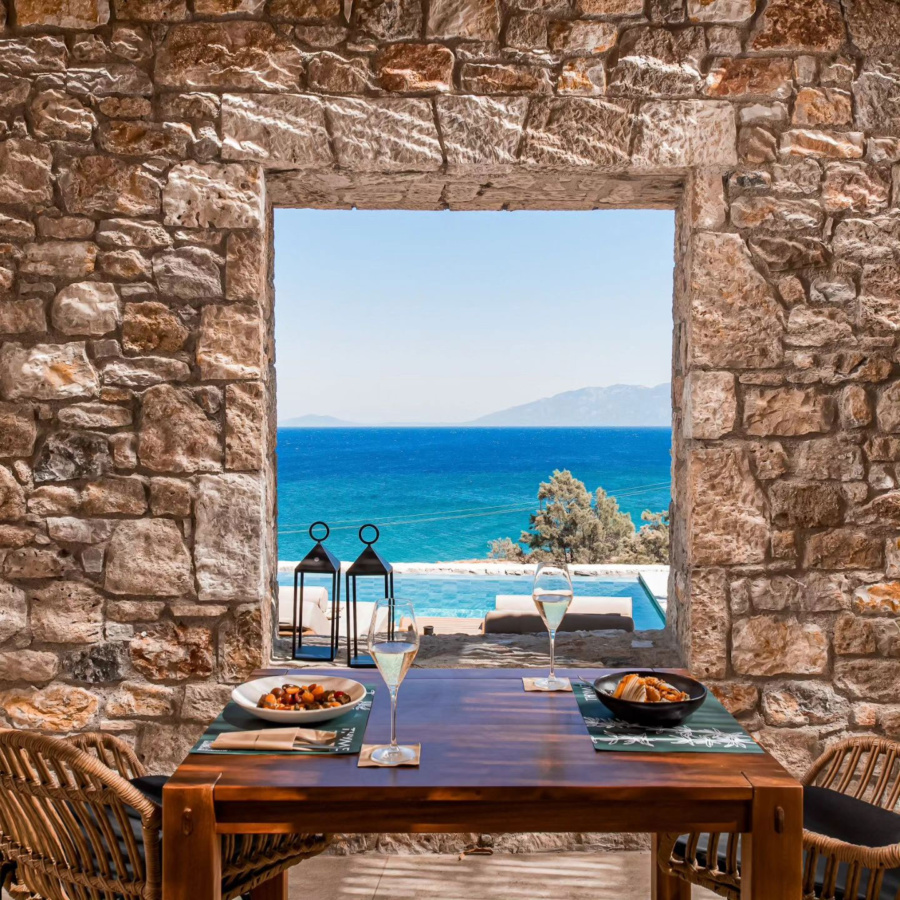
At KOIA All Suite Wellbeing Resort, architecture and experience draw directly from Kos’ healing traditions. Bioclimatic design, herbal gardens, sunrise rituals, and elevated sea views create an environment shaped by balance and reflection. Its proximity to cultural landmarks such as the Asklepion makes it a thoughtful base for travellers seeking this deeper side of the island.
Here, landscape is not only admired; it becomes part of daily living.
A Different Kind of Discovery
Kos is often celebrated for its beaches and summer vibrancy. Yet its most compelling qualities lie in places that invite pause.
The true hidden gems in Kos are not only locations. They are moments: sunrise over Mount Dikaios, silence at Asklepion, the scent of herbs along a hillside path.
For travellers seeking intention rather than itinerary, Kos offers more than scenery. It offers perspective.






 English
  Greek
Greek  German